
Avoiding False Positives in Disposable Email Detection
Blocking a paying customer costs more than admitting a spammer. How whitelist-first filtering, soft blocks and appeal paths keep detection fair.
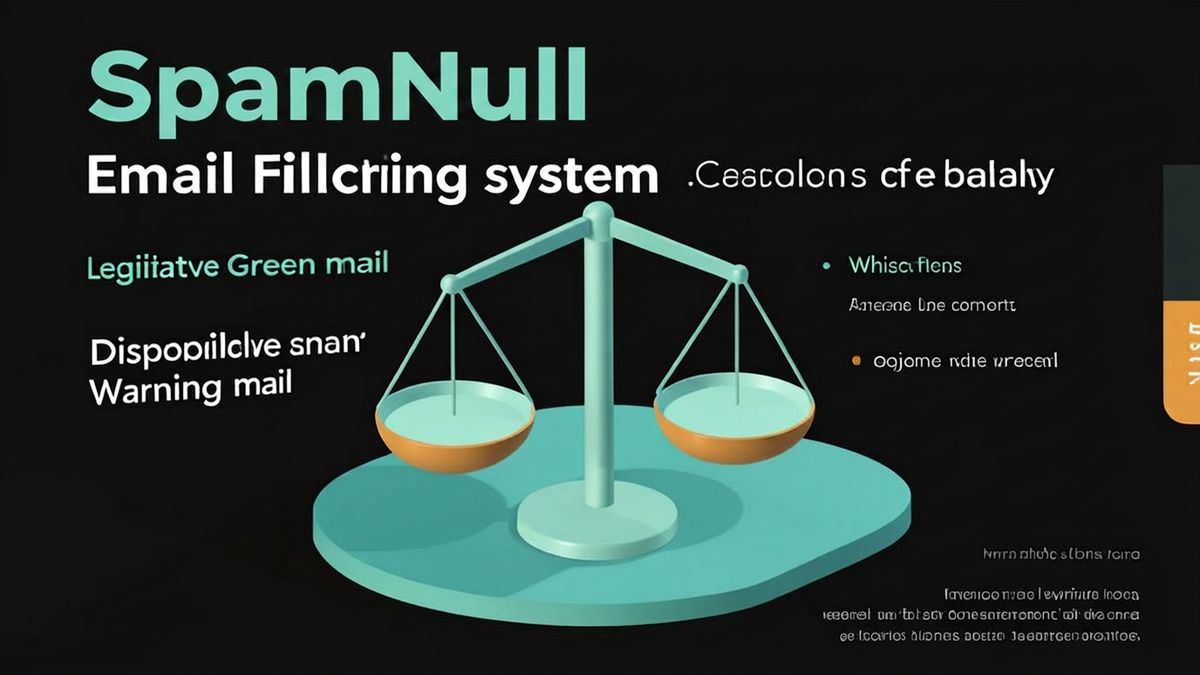
A false positive is a real customer told to go away. It is silent, it never shows up in your funnel, and it costs far more than one throwaway signup. Detection design should start from that asymmetry.
Where false positives come from
- Dirty blocklists. Community lists routinely include major providers and regional ISPs.
- Over-broad pattern rules. Blocking anything containing "temp" or "mail" catches real businesses.
- Custom domains. Small companies and freelancers on niche hosts get flagged by reputation heuristics.
- Plus-addressing panic.
user+shop@gmail.comis a legitimate, useful address.
Whitelist-first filtering
SpamNull removes known-good mail providers from the blocklist before the dataset ever ships. That is why the count is 215,822 usable domains rather than a raw scrape — the filtering step is the product.
Prefer soft blocks
Instead of rejecting outright, degrade: require email confirmation, withhold the free trial credit, queue the account for review, or limit rate. You keep the signal without punishing an edge case.
Always ship an appeal path
Put a contact link in the rejection message. One support email is cheaper than a lost customer who never told you.
Measure it
Log every block with the domain and timestamp. Review the top blocked domains weekly — a legitimate provider climbing that list is your early warning. Combine this with the signup implementation and the wider context in disposable email fundamentals.
Get started
Block disposable signups today
$ npm install spamnull
Keep reading
What Are Disposable Emails (And Why They Break Your Signup Funnel)
Disposable email addresses look real, pass validation, and quietly poison your metrics. Here is how they work and how to detect them locally.

How to Block Disposable Emails at Signup in Node.js
A practical, copy-paste guide to rejecting throwaway email domains in Express, Next.js and edge runtimes with a single local function call.

Self-Hosted vs API Email Validation: An Honest Comparison
Third-party validation APIs add latency, cost, rate limits and a privacy problem. Here is when a local dataset is the better engineering choice.